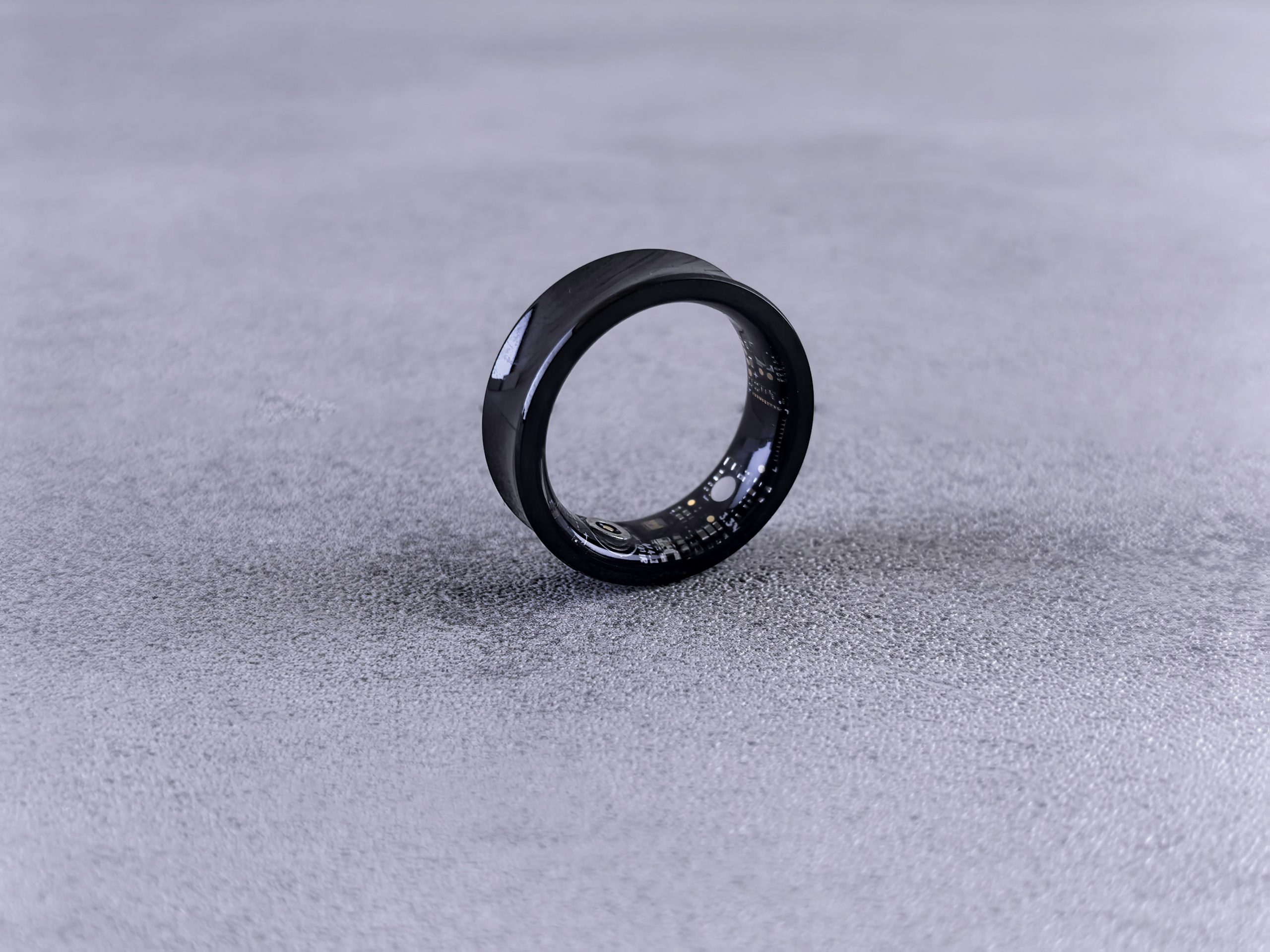
I bought an Oura Ring with my own money and wore it every single night for 90 days before writing this review. No free samples. No affiliate relationship influencing my opinion. Just data.
Here’s what 90 days of sleep tracking actually taught me — and whether I think it’s worth $349 of your money. Check current price on Amazon →
What the Oura Ring Actually Measures
The Oura Ring Gen 4 tracks sleep using three sensors: an infrared photoplethysmography sensor for heart rate and HRV, a negative temperature coefficient sensor for body temperature, and an accelerometer for movement. From these inputs it derives sleep stages — light, deep, and REM — plus sleep latency, total sleep time, and a readiness score each morning.
It does this from your finger, which turns out to be a surprisingly good location for biometric measurements. The arterial blood supply to the finger is strong and consistent, which is why pulse oximeters also use fingers.
90 Days of Honest Data
My average sleep score over 90 days: 76 out of 100. That sounds mediocre but it’s apparently normal — Oura’s data shows most users average between 70-80.
What surprised me most was the consistency of the patterns. My deep sleep was reliably highest on nights when I stopped eating at least 3 hours before bed. My REM sleep was reliably lowest on nights I had even one alcoholic drink. My HRV — a measure of recovery — crashed every time I had a poor night’s sleep and recovered within two nights of good sleep.
None of this was revolutionary information. But having it quantified, night after night, in a graph I could look at over my morning coffee — that changed my behavior in a way that generic advice never did.
What It Gets Right
Accuracy is solid for a consumer device. A 2023 study comparing Oura to polysomnography (clinical sleep study) found roughly 79% agreement on sleep staging. That’s better than most consumer trackers and good enough to identify meaningful patterns.
The readiness score is genuinely useful. Each morning you get a score from 1-100 that incorporates previous night’s sleep, HRV trends, and activity load. On days I ignored a low readiness score and trained hard anyway, I almost always felt worse. On days I respected it and went easy, I recovered faster.
Battery life is excellent. Gen 4 lasts 7-8 days on a single charge. I charged it while showering every few days and never once ran out of battery.
What It Gets Wrong
Sleep staging isn’t perfect. The ring sometimes misclassified periods of light sleep as awake, particularly when I was lying still but not actually asleep. This slightly inflated my sleep latency scores.
The subscription is annoying. Gen 4 requires a $5.99/month membership for full feature access after the first 6 months. It’s not expensive but it’s a recurring cost on top of $349 hardware.
It can’t detect sleep apnea. If you suspect sleep apnea, you need a clinical test. The Oura Ring will show disrupted sleep but can’t diagnose the cause.
Oura Ring vs WHOOP vs Garmin
I’ve also tested WHOOP and use a Garmin for running. Here’s the honest comparison:
WHOOP is subscription only ($239/year) with no upfront hardware cost — actually makes it more expensive over 2+ years. Better for athletes focused on recovery metrics. Sleep tracking is comparable to Oura.
Garmin has excellent GPS and sports tracking but sleep data is noticeably less detailed than Oura. Good if you’re primarily a runner who also wants basic sleep data.
Oura is the best dedicated sleep tracker in this price range. If sleep optimization is your primary goal, it wins.
Is It Worth $349?
For me: yes. Unambiguously.
Not because the data is perfect — it isn’t. But because having consistent, personalized data about my own sleep changed my behavior in measurable ways. I drink less now. I eat earlier. I protect my sleep with more intention. The ring didn’t do that — the data did.
If you’re someone who responds to data and wants to understand your own patterns rather than follow generic advice, the Oura Ring is one of the highest-value sleep investments you can make.
If you’re someone who will glance at the app twice and forget about it — save your $349.
Alternatives to Consider
If the Oura Ring Gen 4 isn’t the right fit for your budget or needs, these are the other sleep trackers I tested:
- Budget option: Garmin Vivosmart 5 — solid sleep stage tracking at half the price
- Athlete focus: WHOOP 4.0 — best recovery scores and strain metrics
Bottom Line
After 90 days of data, the Oura Ring Gen 4 is the best sleep tracker for people who want detailed insights without wearing a screen on their wrist. The sleep stage accuracy is the best I’ve tested, and the readiness score genuinely changed how I structure my days.