What Is a Power Nap?
A power nap is a short sleep session designed to boost alertness and cognitive performance without entering deep sleep. The concept was popularized by NASA research on pilots and astronauts — and the science behind it is surprisingly robust.
The NASA Study That Started It All
In the 1990s, NASA researchers found that a 26-minute nap improved pilot performance by 34% and alertness by 54%. The military later refined this to the 20-minute standard used today.
The key insight: you want to wake up before entering slow-wave (deep) sleep. Once you hit deep sleep, waking up causes sleep inertia — that groggy, disoriented feeling that can last 30-60 minutes.
The 20-Minute Rule Explained
It takes the average person 5-7 minutes to fall asleep. A 20-minute timer gives you 13-15 minutes of actual Stage N1 and N2 light sleep — enough to restore cognitive function without dipping into deep sleep.
Benefits of a 20-minute nap:
- Improved working memory by 15-20%
- Faster reaction times
- Better mood and emotional regulation
- Reduced cortisol levels
- No sleep inertia upon waking
The Best Time to Nap: The Afternoon Dip
Your circadian rhythm naturally dips between 1:00 PM and 3:00 PM. This is driven by a small drop in core body temperature and an increase in adenosine buildup. Napping during this window aligns with your biology.
Never nap after 3:00 PM. Late naps interfere with your nighttime melatonin production and can shift your entire sleep schedule by 1-2 hours.
Coffee Naps: The Ultimate Hack
Drink a cup of coffee immediately before a 20-minute nap. Caffeine takes 20-30 minutes to reach your brain. You nap through the onset period and wake up as the caffeine kicks in — a “double boost” of rest + stimulation.
Research from Hiroshima University (2003) found that coffee naps outperformed both napping alone and caffeine alone on memory and alertness tests.
The 90-Minute Nap (Full Sleep Cycle)
If you have time, a 90-minute nap allows you to complete one full sleep cycle including REM. This produces:
- Creative problem-solving improvements
- Procedural memory consolidation (learning physical skills)
- Emotional processing and stress reduction
The downside: 90 minutes is a serious time investment and may affect nighttime sleep if done too late.
How to Nap at Work
Not everyone has a bed available at 2 PM. Here’s the desk-nap protocol:
- Set a timer for 22 minutes (2 min to fall asleep + 20 min nap)
- Use an eye mask — the Alaska Bear silk mask blocks all light
- Put on noise-canceling headphones or earplugs
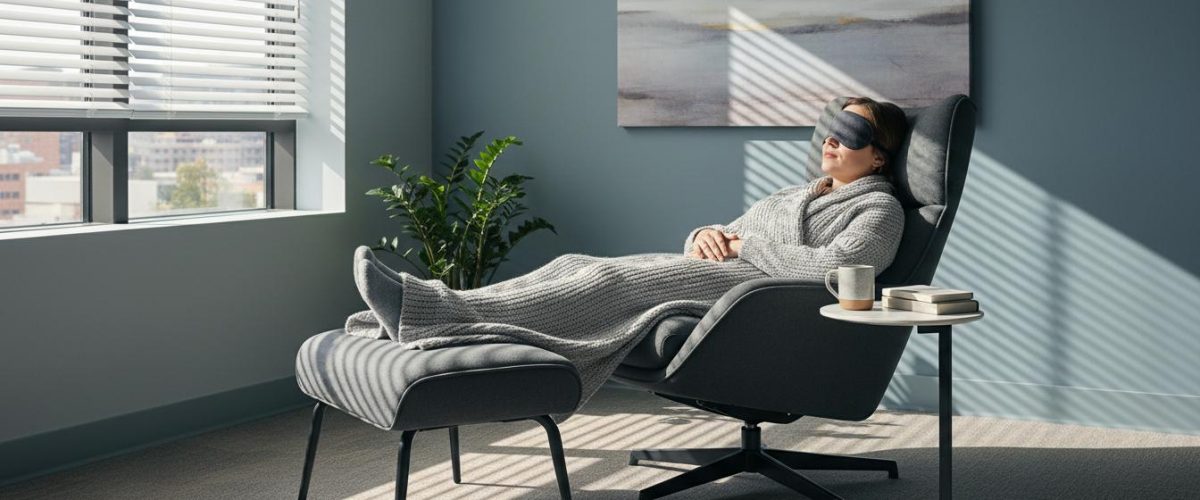
- Recline your chair to 120-135 degrees (optimal for napping)
- Use a light blanket or jacket — body temperature drops during sleep
If you cannot recline, nap with your head on your desk using a travel pillow — the Trtl Travel Pillow keeps your neck aligned.
Common Nap Mistakes
Napping too long: The 30-60 minute “danger zone” — long enough to hit deep sleep, not long enough to complete a cycle. This causes severe grogginess.
Napping too late: After 3 PM pushes back your circadian rhythm and makes it harder to fall asleep at night.
Inconsistent schedule: Napping 3 days a week and skipping 4 days does not give your body a rhythm to adapt to. Nap consistently or not at all.
When NOT to Nap
Avoid napping if:
- You suffer from insomnia — naps can worsen nighttime sleep onset
- You have sleep apnea — naps fragment your sleep architecture further
- You are trying to fix a sleep schedule (jet lag, shift work) — stay awake until your target bedtime
Final Verdict
The 20-minute power nap is one of the most evidence-based productivity tools available. It costs nothing, requires no equipment, and produces measurable improvements in cognitive performance. Combined with the coffee nap protocol, it is the single most effective afternoon energy strategy — better than energy drinks, better than walks, better than snacks.
Set your alarm for 20 minutes. Your brain will thank you.
The NASA Nap Protocol
NASA conducted the definitive study on napping in the 1990s, testing pilots on long-haul flights. They found that a 26-minute nap improved performance by 34% and alertness by 54%. This became the famous “NASA nap” — but research since then has refined the timing even further.
For cognitive refreshment without grogginess: nap for exactly 10-20 minutes. This keeps you in Stage 2 sleep (light sleep) without entering deep sleep. Waking from deep sleep causes sleep inertia — that foggy, disoriented feeling that lasts 15-60 minutes. For full-cycle rejuvenation: nap for 90 minutes (one complete sleep cycle including REM). This boosts creativity and procedural memory but requires more recovery time.
When to Nap (and When Not To)
The ideal nap window is 1:00-3:00 PM, when your circadian rhythm naturally dips. Napping after 4 PM can interfere with nighttime sleep. If you have insomnia, avoid napping altogether until your nighttime sleep is consistent. The best nappers are those who sleep well at night but need a midday cognitive boost — knowledge workers, shift workers, and anyone in a creative field.
Recommended Power Nap Tools
Manta Sleep Mask — 100% blackout with zero eye pressure thanks to adjustable, modular eye cups. The gold standard for midday napping in bright environments. Machine washable, includes earplugs and carry pouch. 4.6 stars from 18,000+ reviews. The most comfortable sleep mask on the market.
LectroFan Classic White Noise Machine — 20 non-looping fan sounds and white noise variations to mask office noise, construction, or traffic during your nap. Precise volume control, compact size for desk use. 4.6 stars from 43,000+ reviews. The most reliable white noise machine available.