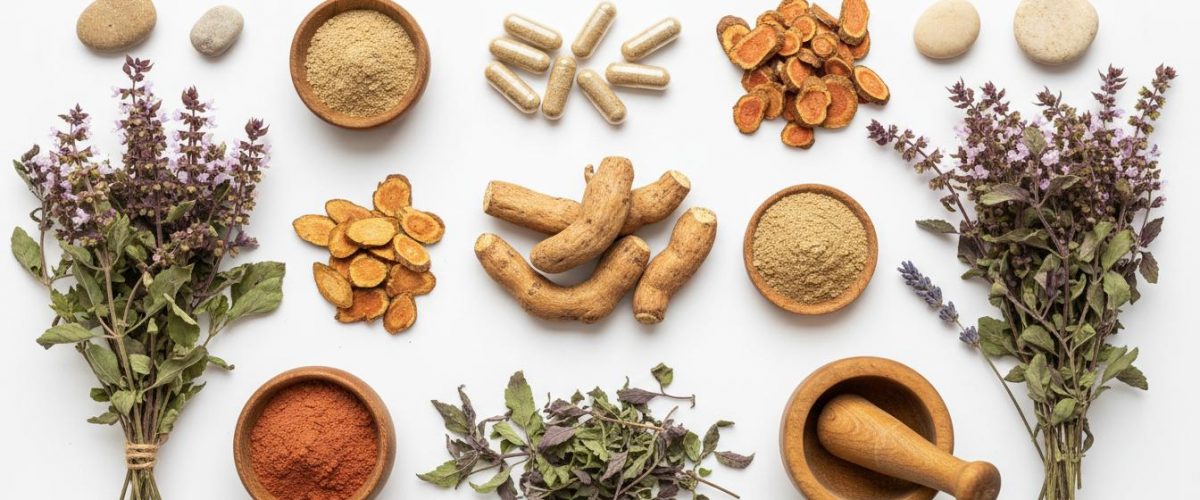
41% of consumers now prioritize supplements for mood support and stress management, driven by the search for “focused calm” to prevent professional burnout. Adaptogens are at the center of this trend. But the category ranges from genuinely evidence-backed compounds to expensive herbal extracts with minimal human research.
Here’s exactly which is which.
What Adaptogens Actually Are
Adaptogens are a class of herbs and mushrooms that help the body maintain homeostasis under stress — they modulate rather than stimulate or suppress. The key property: they help you respond more appropriately to stressors rather than producing a fixed pharmacological effect. This makes them fundamentally different from stimulants or sedatives.
Tier 1 — Strong Human Evidence
Ashwagandha (KSM-66 or Sensoril extract)
The most studied adaptogen for stress with the most consistent human trial data. Multiple randomized controlled trials show significant reductions in cortisol, perceived stress, and anxiety with 300-600mg of standardized extract daily. Also has meaningful evidence for testosterone support in men and sleep quality improvement. The clearest recommendation in the entire adaptogen category.
Dose: 300mg KSM-66 twice daily. Takes 4-8 weeks to show full effect.
Rhodiola Rosea
Best evidence for acute stress performance — reducing mental fatigue and maintaining cognitive performance during prolonged high-stress periods. A 2009 study of physicians during night duty found significant improvements in fatigue, mental performance, and general well-being. Works faster than ashwagandha — effects noticeable within days for some people.
Dose: 200-400mg of a 3% rosavins extract, taken in the morning. Do not take in the evening — it can disrupt sleep for some people.
Tier 2 — Promising Evidence
Reishi Mushroom
Traditional Chinese medicine staple with growing research interest. Best evidence is for immune modulation and sleep quality improvement. The cognitive and stress benefits are less well established in human trials than ashwagandha or rhodiola. Worth including in a mushroom stack but not a first-line stress supplement.
Holy Basil (Tulsi)
Reasonable evidence for cortisol reduction and anxiety management. Less studied than ashwagandha but a legitimate alternative for people who respond poorly to ashwagandha (a small percentage find it stimulating rather than calming).
Eleuthero (Siberian Ginseng)
Extensive traditional use and reasonable Soviet-era research on performance under stress. The human trial quality is lower by modern standards but the compound has a longer use history than most adaptogens. Decent option for general stress resilience.
Tier 3 — Mostly Marketing
Most Mushroom Blend Products
Products combining lion’s mane, reishi, chaga, cordyceps, and turkey tail at 100-200mg each hit none of the individual compounds at effective doses. Buy single mushroom products at effective doses rather than blends at ineffective doses.
My Recommended Stack
For stress management: Ashwagandha KSM-66 300mg twice daily + Rhodiola Rosea 200mg in the morning on high-stress days. That’s it. Both are affordable, well-studied, and work through complementary mechanisms — ashwagandha for baseline cortisol regulation, rhodiola for acute cognitive performance under stress.
Best Adaptogen Supplements
Ashwagandha, rhodiola, and holy basil for cortisol management, stress resilience, and balanced energy.
View on Amazon →