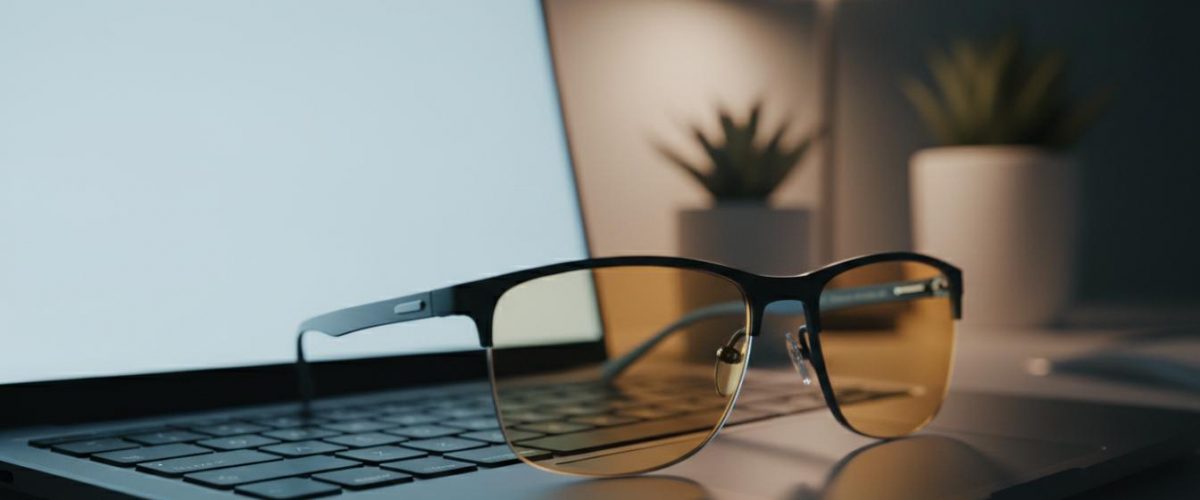
Blue light glasses have gone from niche biohacker tool to mainstream product in the space of a few years. The marketing is compelling: block the blue wavelengths from screens, protect your melatonin production, sleep better. But the research is more complicated than the advertising suggests.
The Science Behind Blue Light and Sleep
The concern about blue light is legitimate. Specialized photoreceptors in your eyes called intrinsically photosensitive retinal ganglion cells (ipRGCs) are particularly sensitive to short-wavelength blue light (around 480nm). When stimulated, these cells suppress melatonin production via the suprachiasmatic nucleus — your circadian master clock.
Evening blue light exposure suppresses melatonin and delays sleep onset. This is well established in the research.
Where the Evidence Gets Complicated
The question is whether blue light blocking glasses — as opposed to simply reducing overall light exposure — make a meaningful difference.
A 2021 Cochrane review found insufficient evidence that blue light filtering glasses reduce eye strain or improve sleep outcomes compared to non-filtering lenses. A 2023 study in Sleep Medicine Reviews found that the brightness of light matters more than the spectral composition — meaning that dimming your screen has more impact than filtering its color.
The most honest interpretation: screen light at night disrupts sleep primarily because of its overall intensity, not just its blue wavelength content. Reducing screen brightness and using night mode addresses the root cause more directly than blue light glasses.
When Blue Light Glasses Are Worth It
Despite the nuanced evidence, blue light glasses are worth considering in two scenarios. First, if you work in a brightly lit environment in the evenings and can’t control the lighting — office workers, healthcare workers on evening shifts. Second, as a behavioral cue — putting on a pair of glasses signals to your brain that you’re entering wind-down mode, which itself has value regardless of the optical filtering.
My Picks If You Want to Try Them
Budget option: Uvex Skyper Safety Glasses (~$10) — These are industrial safety glasses that happen to block an enormous amount of blue and green light. Ugly. Effective. The choice of sleep researchers and biohackers who prioritize function over aesthetics.
Stylish option: Felix Gray (~$95) — Genuinely attractive frames with legitimate blue light filtering. If you’ll actually wear them because they look good, they’re worth the premium over ugly alternatives you’ll never put on.
Best approach overall: Use Night Shift on iPhone or Night Mode on Android from 8pm onwards. Reduce screen brightness to minimum comfortable level. These interventions address the same mechanism — intensity of light — without requiring any purchase.
The Bottom Line
Blue light glasses are a legitimate tool with overstated marketing. The underlying concern about evening light exposure is valid. Screen dimming and night mode achieve the same result for free. If you want blue light glasses, buy them for the behavioral cue and the protection in unavoidably bright environments — not because they’ll transform your sleep on their own.
Recommended: Check Blue Light Glasses on Amazon →
Best Blue Light Glasses for Sleep
Block harmful blue light and protect your melatonin production. These are the top-rated options for better sleep.
View on Amazon →