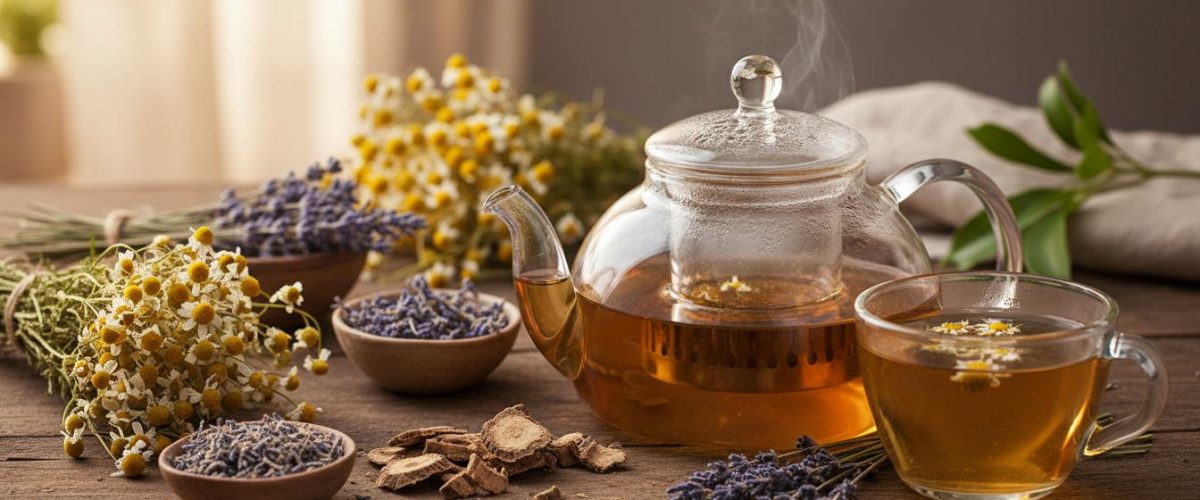
Herbal tea before bed is one of humanity’s oldest sleep rituals. Some of it is legitimate. Much of it is expensive hot water with good marketing. Here’s how to tell the difference.
The Honest Framework
Most herbal teas contain such small amounts of active compounds that any sleep benefit is primarily from the ritual itself — the warmth, the slowing down, the signal to your nervous system that the day is ending. This is genuinely valuable. Don’t dismiss it. But don’t expect pharmacological effects from a tea bag.
That said, a few herbs have real evidence at the right doses. The challenge is that most commercial tea products contain insufficient quantities to deliver meaningful effects.
Herbs With Actual Evidence
Chamomile
The most researched sleep herb. Chamomile contains apigenin, a flavonoid that binds to GABA receptors in the brain — the same receptors targeted by benzodiazepines, though with dramatically weaker effect. A 2017 study found significant improvements in sleep quality in postpartum women who drank chamomile tea for two weeks.
The dose caveat: most studies use chamomile extract at 270mg, not brewed tea. A strong chamomile tea provides a fraction of this. Drink it for the ritual and mild relaxation — don’t expect pharmaceutical effects.
Passionflower
One of the more interesting herbs for sleep. A 2011 study found that passionflower tea improved subjective sleep quality significantly compared to placebo. The mechanism involves GABA modulation similar to chamomile but potentially more potent. Look for teas that include passionflower as a primary ingredient.
Valerian Root
The evidence is mixed and highly variable between studies. Some people respond strongly to valerian; others notice nothing. The smell is notoriously terrible. If you want to experiment, capsule form is more practical than tea and allows consistent dosing. Not a reliable recommendation for most people.
Lemon Balm
Modest but consistent evidence for reducing anxiety and improving sleep onset. Often combined with valerian in research studies. A reasonable addition to a sleep tea blend.
My Picks
Best single herb: Chamomile. Celestial Seasonings Sleepytime is a reasonable and affordable option — it combines chamomile with spearmint and lemongrass for a pleasant flavor. Not a sleep medication, but a genuine wind-down ritual with mild anxiolytic properties.
Best blend: Yogi Bedtime Tea. Contains passionflower, valerian, and chamomile together. More likely to produce noticeable effects than single-herb teas due to the combined mechanism action.
The Honest Bottom Line
Herbal tea is a valuable part of a sleep routine — primarily for the ritual signal it creates and secondarily for mild relaxation effects. If you expect it to work like a sleep medication, you’ll be disappointed. If you use it as a wind-down cue combined with dimming lights and reducing stimulation, it earns its place in your evening routine.
The ritual matters as much as the herb. The warmth, the slowing down, the deliberate act of preparing something calming — these signals tell your nervous system that sleep is approaching. Don’t underestimate that.