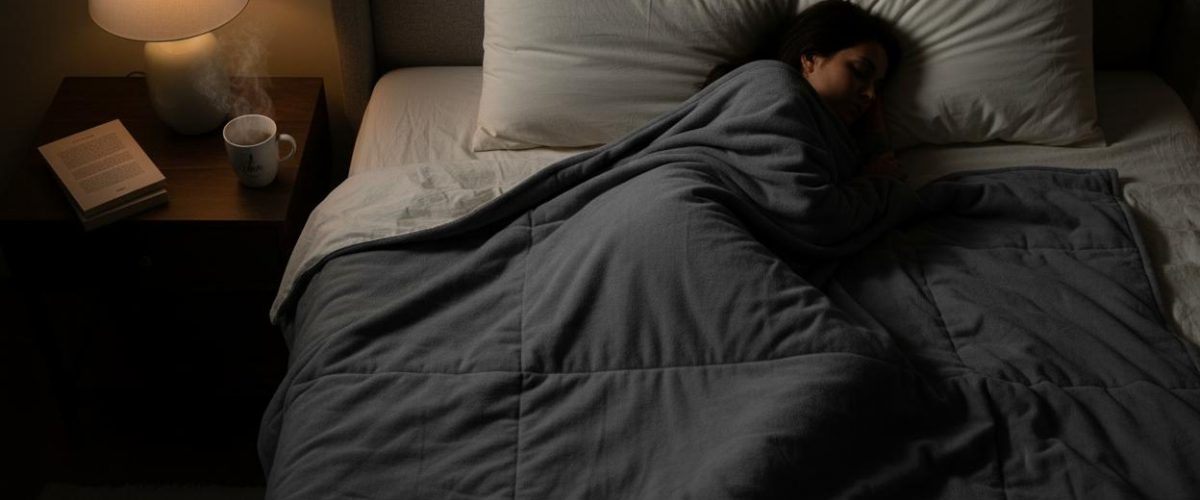
Why Weighted Blankets Work for Anxiety
Weighted blankets use Deep Pressure Stimulation (DPS) — gentle, distributed pressure across your body that mimics the sensation of being hugged. Research published in the Journal of Clinical Sleep Medicine found that weighted blankets significantly reduced insomnia severity and improved sleep maintenance in adults with chronic insomnia.
The mechanism is grounded in the autonomic nervous system. DPS activates the parasympathetic (rest-and-digest) response while reducing sympathetic (fight-or-flight) activation. For people with anxiety, this physical calming effect can be the difference between hours of rumination and actual sleep.
How to Choose the Right Weight
The general rule: 10% of your body weight, plus or minus 1-2 pounds. Too light and you won’t get the DPS effect. Too heavy and it becomes uncomfortable or claustrophobic.
| Body Weight | Blanket Weight |
|---|---|
| 100-120 lbs | 10-12 lbs |
| 120-150 lbs | 12-15 lbs |
| 150-180 lbs | 15-18 lbs |
| 180-220 lbs | 18-20 lbs |
| 220+ lbs | 20-25 lbs |
King and queen sizes: If you share a bed, each partner needs their own weighted blanket — a single large weighted blanket won’t distribute weight evenly across two bodies.
What to Look For
1. Even Weight Distribution
Glass beads are the gold standard — they’re denser than plastic poly pellets, so the blanket stays thinner and more breathable. The blanket should have a gridded construction (4×4 inch pockets or smaller) to prevent beads from pooling at the edges.
2. Cooling Properties
Traditional weighted blankets sleep hot. Look for:
- Bamboo or Tencel covers — significantly more breathable than cotton
- Moisture-wicking inner layers — pulls sweat away from the body
- Glass bead fill — doesn’t trap heat like sand or grain fills
3. Removable Cover
Weighted blankets are difficult to wash. A removable, machine-washable cover is essential for hygiene. Ensure the cover attaches securely so it doesn’t bunch or shift.
4. Size Matters
Weighted blankets are designed to cover your body, not your bed. A twin/individual size (48×72 inches) is standard. Don’t size up — excess fabric hanging off the bed pulls weight away from your body.
Top Picks for 2026
Best Overall: Gravity Blanket
The original that started the trend. Fine-grade glass beads, premium micro-plush duvet cover, and a precision gridded construction that maintains even weight distribution all night. Available in 15, 20, and 25 lbs. Check price on Amazon →
Best for Hot Sleepers: Luna Cooling Weighted Blanket
Oeko-Tex certified cotton with a breathable, moisture-wicking construction. The lyocell bamboo cover feels cool to the touch and regulates temperature better than any competitor. Machine washable. Check price on Amazon →
Best Budget: YnM Weighted Blanket
Seven-layer design with glass beads and a 4.7×4.7 inch pocket system. Available in the widest range of weights (5-30 lbs) and sizes. The value-for-money leader. Check price on Amazon →
Best for Travel: Nodpod Weighted Sleep Mask
Not a full blanket — a weighted eye mask with microbeads on both sides. Provides gentle pressure around the eyes (like a weighted blanket for your face). Perfect for travel, naps, and migraine relief. Check price on Amazon →
Who Should Avoid Weighted Blankets
- Children under 2 — suffocation risk
- People with sleep apnea or COPD — the added weight can restrict breathing
- Those with claustrophobia — the pressure can trigger panic in some individuals
- Anyone who can’t lift the blanket off themselves — you need enough mobility to remove it independently
The Bottom Line
A weighted blanket isn’t magic — but for anxiety-driven insomnia, it’s one of the most effective non-pharmacological interventions available. Start with 10% of your body weight, choose a cooling option if you sleep hot, and give yourself 5-7 nights to adjust before deciding if it works for you.