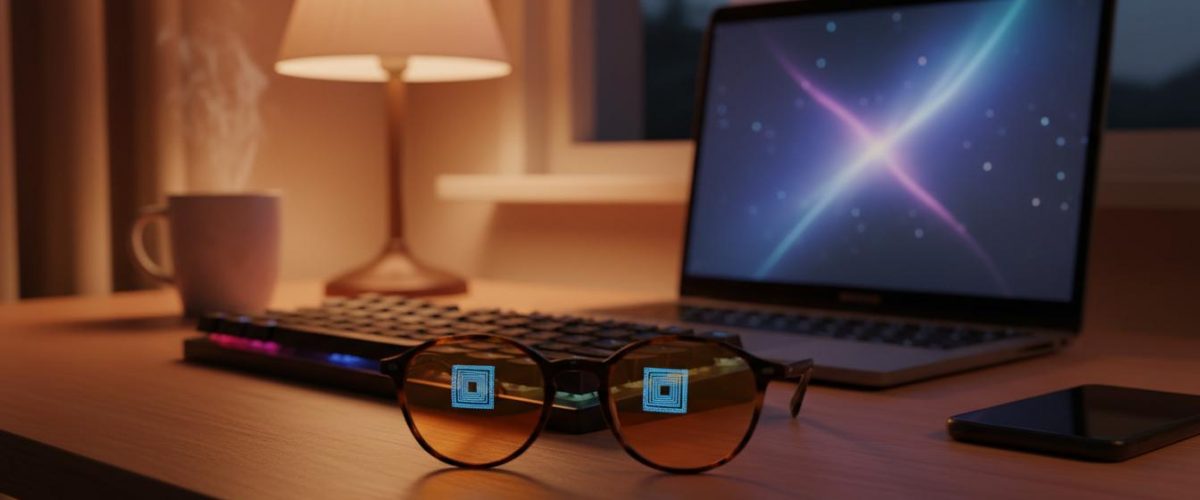
The Marketing vs. The Science
Blue light blocking glasses are marketed as the solution to digital eye strain, poor sleep, and even macular degeneration. The reality is more nuanced. They help with some of these claims but not others — and the magnitude of the effect varies significantly depending on when and how you use them.
Understanding what blue light actually does in your body is the key to using these glasses effectively rather than buying expensive placebo.
What Blue Light Actually Does
Sleep and Circadian Rhythm
Blue light (460-480 nm wavelength) is the primary signal your brain uses to determine whether it’s day or night. When blue light hits the melanopsin receptors in your retina, it signals the suprachiasmatic nucleus to suppress melatonin production and promote alertness.
This is great at 10 AM. It’s terrible at 10 PM. Research shows that evening exposure to blue light delays melatonin onset by 1.5-3 hours, shifts your circadian rhythm later, and reduces the quality of sleep you eventually get.
Digital Eye Strain
Here’s where marketing diverges from science. Blue light is not the primary cause of digital eye strain. The main culprits are:
- Reduced blink rate when staring at screens (from 15-20 per minute to 3-5)
- Extended near-focus causing accommodative fatigue
- Poor ergonomics and viewing distance
- Uncorrected vision problems
Blue light contributes to eye strain, but it’s a minor factor compared to these other issues.
Macular Degeneration
High-energy blue light can damage retinal cells in laboratory settings. However, the intensity of blue light from screens is roughly 100-1000x lower than the levels shown to cause damage. There is currently no clinical evidence that screen-use blue light causes macular degeneration in humans.
What Blue Light Glasses Actually Help
Evening Sleep Quality: Modest but Real
Multiple studies show that wearing blue light blocking glasses for 2-3 hours before bed modestly improves sleep quality. The effect sizes are moderate — not life-changing, but noticeable for people with evening screen habits:
- Faster sleep onset (15-30 minutes faster in some studies)
- Modest increase in melatonin levels
- Small improvement in subjective sleep quality
The effect is strongest for people who use screens within 2 hours of bedtime and weakest for those with good sleep hygiene already.
Shift Workers: More Significant Benefit
People who must use screens at night (night shift workers, emergency responders) benefit more because they can’t eliminate the exposure entirely. Blue light glasses partially mitigate the circadian disruption of nighttime work.
Daytime Use: Minimal Evidence
There’s no strong evidence that wearing blue light glasses during the day helps with anything. Your eyes are designed to receive blue light during daylight hours. Blocking it may actually reduce alertness and mood.
Alternatives That Work Better
Software Solutions (Free)
f.lux (desktop) and Night Shift (iOS) / Night Light (Android) reduce blue light emission from your screens. They’re not as effective as glasses (light leaks around the screen, room lighting still hits your eyes), but they’re free and better than nothing.
Stop Using Screens 2 Hours Before Bed (Most Effective)
The most effective solution is also the cheapest: no screens in the 2 hours before bed. Replace evening scrolling with reading, conversation, or light stretching. This eliminates blue light exposure entirely and removes the stimulating content that also disrupts sleep.
Dim Room Lighting
Switch to warm, dim lighting in the evening. Use lamps instead of overhead lights. Consider red/amber LED bulbs for bedroom and bathroom — these emit minimal blue light.
20-20-20 Rule for Eye Strain
Every 20 minutes, look at something 20 feet away for 20 seconds. This addresses the real cause of digital eye strain — prolonged near-focus — better than blue light glasses.
If You Buy Glasses: What to Look For
Orange/Amber Lenses Block More Blue Light
Clear or yellow-tinted lenses block 10-30% of blue light. Orange/amber lenses block 50-90%. For evening use, the darker tint is more effective.
Verify the Wavelength Data
Legitimate manufacturers publish spectral transmission data showing exactly what wavelengths are blocked. Avoid brands that make vague claims without data.
Top Picks
Best Overall: UVEX Skyper Blue Light Blocking Glasses
Orange lenses block 98% of blue light. Under $15. The gold standard used in circadian research studies. Not stylish, but effective and cheap.
Best Stylish Option: Felix Gray Roebling
Clear lenses with a subtle blue coating. Blocks less light than orange lenses (about 30%), but look like regular glasses. Good for daytime screen use, less effective for evening sleep.
Best Budget: ANYLUV Blue Light Glasses
Yellow-tinted lenses at a budget price. Block about 40% of blue light. A good entry point to test if blue light filtering helps you personally.
The Bottom Line
Blue light blocking glasses provide modest benefits for evening sleep quality and are worth considering if you must use screens before bed. They’re not necessary for daytime use, won’t prevent eye strain (the 20-20-20 rule will), and won’t prevent macular degeneration. If you’re serious about sleep, the highest-ROI approach is still: no screens 2 hours before bed, dim warm lighting, and a consistent sleep schedule.