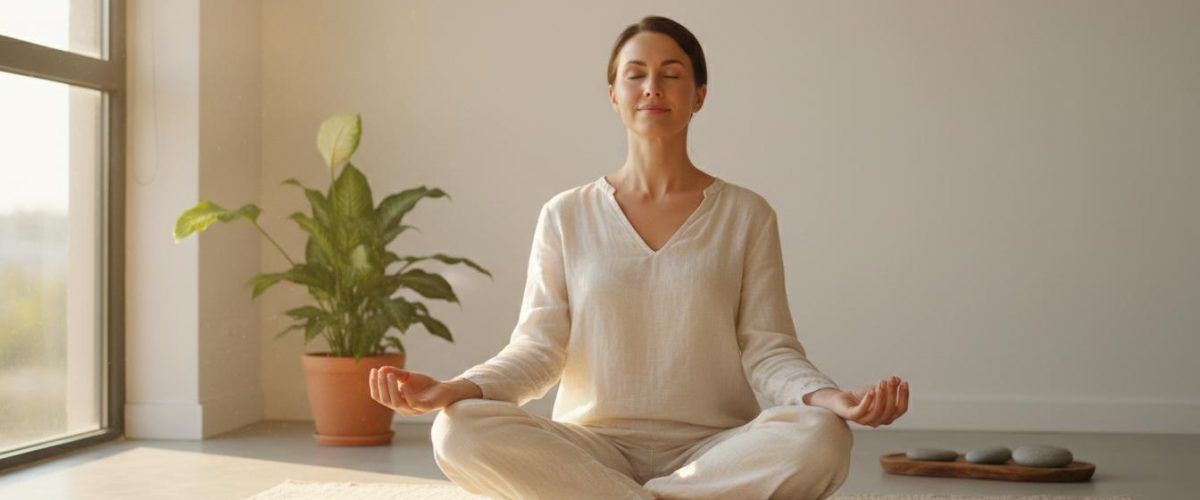
Scientific breathwork has become a major pillar of daily wellness routines in 2026 — people are practicing specific techniques to increase CO2 tolerance and improve oxygen delivery to their cells. The science supports the enthusiasm, with more nuance than most breathwork content acknowledges.
Why Breathing Technique Matters More Than You Think
Most people are chronic over-breathers — taking more breaths per minute at higher volumes than their physiology requires. This seems counterintuitive: more breathing should mean more oxygen. But the relationship between breathing and oxygen delivery is mediated by CO2, not just oxygen intake.
CO2 is not just a waste gas. It’s the primary signal that triggers hemoglobin to release oxygen to tissues (the Bohr Effect). When you chronically over-breathe and lower CO2, your blood becomes more alkaline and hemoglobin holds onto oxygen more tightly — meaning less oxygen actually reaches your muscles and brain despite normal blood oxygen saturation readings.
Training CO2 tolerance through breathwork improves oxygen delivery efficiency — which is why elite endurance athletes often breathe surprisingly slowly at moderate intensities.
The Techniques With Real Evidence
Box Breathing — For Stress and Focus
Inhale 4 counts, hold 4 counts, exhale 4 counts, hold 4 counts. Repeat for 4-8 cycles. Used by Navy SEALs and elite military units for stress regulation under pressure. The mechanism: the extended hold and slow exhale activate the parasympathetic nervous system, reducing heart rate and cortisol. Particularly effective before high-stakes situations — presentations, competitions, difficult conversations.
4-7-8 Breathing — For Sleep Onset
Inhale 4 counts, hold 7 counts, exhale 8 counts. The extended exhale relative to inhale is the key — it maximally activates the vagal brake on heart rate. Dr. Andrew Weil popularized this as a sleep aid. The research on its specific parameters is limited but the underlying mechanism — extended exhale for parasympathetic activation — is well established.
Physiological Sigh — For Acute Stress Relief
Double inhale through the nose (short inhale then a second short inhale to fully inflate the lungs) followed by a long slow exhale. Stanford research shows this single breath pattern most efficiently deflates the alveoli and resets the respiratory system. Takes about 5 seconds and produces immediate nervous system downregulation. The fastest evidence-based stress relief technique available.
Wim Hof Method — For Cold Adaptation and Energy
Thirty deep power breaths followed by a breath hold after exhale, repeated for 3 rounds. Creates deliberate hypocapnia (low CO2) that paradoxically increases alkalinity and produces a flooding of adrenaline. Research shows it can voluntarily influence the immune and autonomic nervous systems — genuinely interesting science. Not recommended for people with cardiovascular conditions or during water immersion due to blackout risk.
Nasal Breathing During Exercise — For Endurance
The research on nasal-only breathing during exercise consistently shows improved CO2 tolerance, more efficient oxygen delivery, and — after a 4-6 week adaptation period — no performance decline despite the initial restriction. Patrick McKeown’s Oxygen Advantage methodology is the most systematic approach to implementing this.
Where to Start
Morning: 5 minutes of box breathing before starting work. Pre-stress: physiological sigh — one double inhale, long exhale, done in 5 seconds. Pre-sleep: 4-7-8 for 4 cycles. These three cover the main performance use cases and cost nothing.
Best Breathwork Devices
Tools for controlled breathing exercises that lower cortisol, improve HRV, and deepen sleep.
View on Amazon →