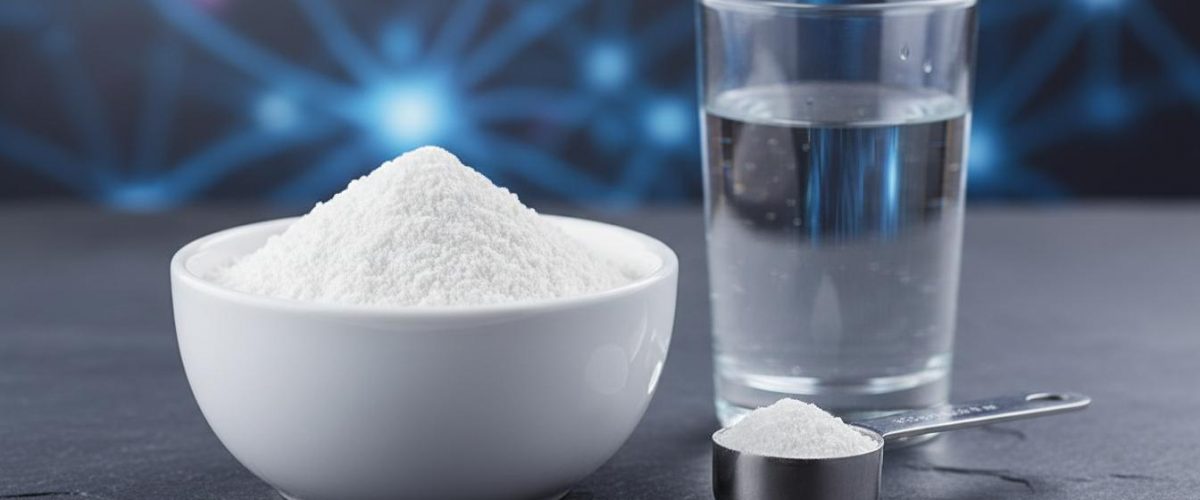
Creatine Is Not Just for Muscles
When most people hear “creatine,” they picture bodybuilders and gym bros. But creatine is not a muscle supplement — it is an energy supplement. And your brain is the most energy-hungry organ in your body, consuming 20% of your calories despite being 2% of your weight.
Over the past decade, research has increasingly shown that creatine supplementation enhances cognitive performance — particularly in memory, mental fatigue, and executive function. Here is what the science says.
How Creatine Works in the Brain
Creatine phosphate (phosphocreatine) serves as an energy reserve for cells. When ATP — your cells’ primary energy currency — gets depleted, phosphocreatine rapidly regenerates it. This is especially important in tissues with high, fluctuating energy demands.
Your brain is exactly that kind of tissue. Neurons require enormous amounts of ATP to maintain electrical potentials, synthesize neurotransmitters, and clear metabolic waste. When brain energy drops, cognitive performance declines.
Creatine supplementation increases phosphocreatine stores in the brain by 5-15%, providing a larger energy buffer during demanding cognitive tasks.
The Research: Cognitive Benefits
Memory Enhancement
A 2003 study by Rae et al. found that 5g of creatine daily for 6 weeks improved working memory and intelligence (Raven’s Progressive Matrices) in vegetarian subjects — who have lower baseline creatine levels.
A 2007 meta-analysis confirmed that creatine consistently improves short-term memory and reasoning tasks.
Reduced Mental Fatigue
A 2009 study by Watanabe et al. found that creatine reduced mental fatigue during repeated math calculations. Subjects performed better and reported less subjective fatigue.
This is particularly relevant for knowledge workers who perform cognitively demanding tasks for extended periods.
Neuroprotection
Ceratine shows promise in neurodegenerative conditions. A 2004 study found that creatine slowed progression of Parkinson’s disease in mice. Human trials in Huntington’s and ALS have shown mixed but promising results.
The mechanism: creatine stabilizes mitochondrial function and reduces oxidative stress — two key factors in neurodegeneration.
Sleep Deprivation Protection
A 2006 study by McMorris et al. found that creatine partially preserved cognitive performance during 24 hours of sleep deprivation. Subjects showed better mood, balance, and memory compared to placebo.
For shift workers or those with irregular schedules, this may be particularly valuable.
Optimal Brain Dosing
Dose: 3-5g daily
Form: Creatine monohydrate (the most researched form — no other form has been proven superior)
Timing: Any time of day. Some prefer morning for consistency. Some take it before mentally demanding tasks. There is no strong evidence favoring one timing over another.
Loading phase: Optional. 20g daily (divided into 4 doses) for 5-7 days saturates muscles faster. But 3-5g daily achieves the same saturation in 3-4 weeks.
With food: Take with a meal containing carbohydrates — insulin helps transport creatine into cells.
Best Creatine for Cognitive Use
For brain benefits, the form matters less than the purity. Any pharmaceutical-grade creatine monohydrate works.
Best overall: Thorne Creatine — NSF certified, micronized for better dissolution, no fillers.
Best budget: Nutricost Creatine Monohydrate — pure, third-party tested, under $20 for 100 servings.
Best for travel: Optimum Nutrition Creatine Capsules — no mixing, no taste, portable.
Side Effects and Myths
Kidney damage: Myth. Multiple long-term studies in healthy individuals show no adverse effects on kidney function at 3-5g daily. If you have pre-existing kidney disease, consult a doctor.
Hair loss: One 2009 study showed a small increase in DHT (a hormone linked to hair loss). No study has directly linked creatine to hair loss. If you are genetically predisposed to male pattern baldness, monitor. Otherwise, no concern.
Bloating: Some water retention in muscles occurs during the first week — this is intracellular, not subcutaneous. It is not “bloating” in the visible sense. It goes away after adaptation.
Dehydration: Creatine draws water into cells. Drink adequate water — aim for half your body weight in ounces daily.
Who Benefits Most?
Creatine for brain performance benefits:
- Vegetarians and vegans: Lower baseline creatine from diet (creatine is found in meat and fish)
- People over 50: Natural creatine production declines with age
- Knowledge workers: Sustained cognitive performance over long hours
- Sleep-deprived individuals: Partially preserves cognitive function
- Students: Improved working memory and reasoning during exams
Stacking for Cognitive Enhancement
Creatine stacks well with:
- Caffeine: Complementary energy systems (ATP regeneration + adenosine antagonism)
- Omega-3s: Support neuronal membrane health
- B-vitamins: Cofactors in energy metabolism
Final Verdict
Creatine monohydrate is one of the most well-researched, safe, and cost-effective supplements for both physical and cognitive performance. At 3-5g daily, it costs about $0.15 per day.
The cognitive benefits are real but modest — expect 5-15% improvement in memory and mental stamina, not a Limitless-style transformation. Combined with adequate sleep, exercise, and nutrition, it is a valuable addition to any biohacker’s stack.
If you do not eat meat regularly, creatine is arguably the highest-impact supplement you can take for both brain and body.
How Creatine Works in the Brain
Most people think creatine is just for bodybuilders. The research tells a different story. Your brain uses ATP (energy) at a massive rate — about 20% of your body’s total energy demand despite being only 2% of your body weight. Creatine phosphate helps regenerate ATP rapidly, which is especially important during mentally demanding tasks.
A 2023 meta-analysis in the journal Nutrients found that creatine supplementation improved short-term memory, reasoning, and intelligence in healthy adults. The effects were strongest in vegetarians (who have lower baseline creatine levels) and older adults (who naturally decline in brain creatine).
The dosage is simple: 5 grams per day, every day. No loading phase needed. Mix it in your morning coffee, protein shake, or water. It’s tasteless and odorless. Within 2-4 weeks, your brain creatine stores are fully saturated.
Stacking Creatine for Maximum Brain Benefit
For enhanced cognitive effects, consider pairing creatine with omega-3 fatty acids (DHA specifically, which supports neuronal membrane fluidity) and adequate hydration. Dehydration negates many of creatine’s benefits because it draws water into cells. Drink at least 2-3 liters of water daily when supplementing.
Recommended Creatine Products
Thorne Creatine Monohydrate Powder — NSF Certified for Sport, meaning it’s tested for banned substances and contaminants. Pure Creapure-sourced creatine — the gold standard. Unflavored, dissolves easily in water or coffee. 4.7 stars from 8,200+ reviews.
Keto-Mojo GK+ Blood Glucose & Ketone Testing Kit — If you’re combining creatine with a performance diet, tracking your glucose and ketones gives you real data on how your brain fuel is working. 4.6 stars from 459 reviews.