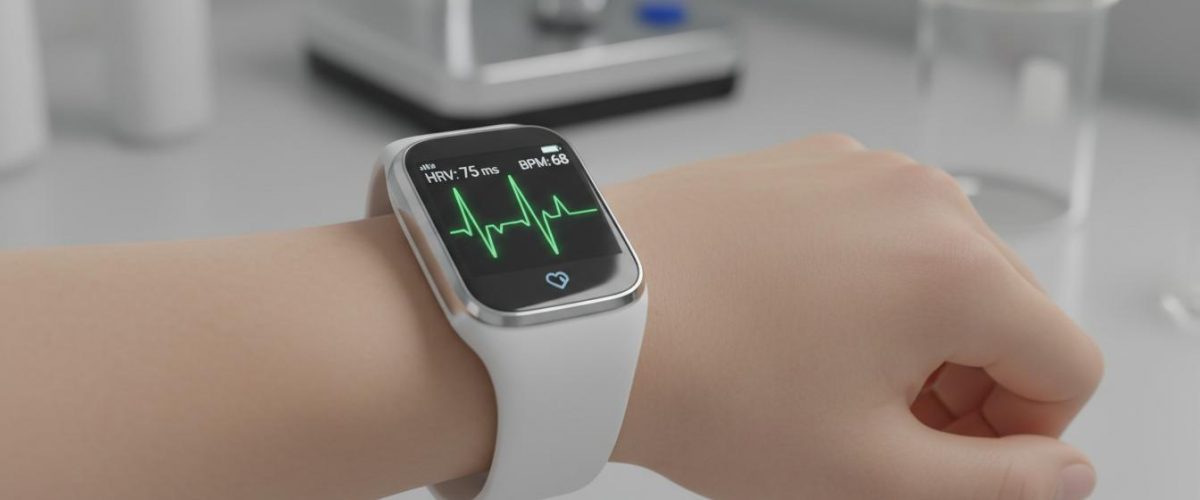
Heart rate variability (HRV) is the single most actionable biometric available to everyday performance enthusiasts. If you’re going to track one number to guide your training, recovery, and lifestyle decisions, this is it.
Here’s everything you need to understand and use it effectively.
What HRV Actually Measures
HRV measures the variation in time between consecutive heartbeats. Counterintuitively, a heart that beats with perfectly even intervals is less healthy than one with slight variations. Higher HRV indicates a nervous system that’s effectively shifting between sympathetic (fight-or-flight) and parasympathetic (rest-and-digest) states — a marker of resilience and adaptability. Lower HRV indicates a nervous system stuck in a stressed state with reduced capacity to recover.
HRV is influenced by sleep quality, training load, alcohol, illness, stress, nutrition, and dozens of other factors simultaneously. This makes it a powerful composite indicator of overall physiological readiness.
How to Measure It
Oura Ring — Measures HRV during sleep, which provides the most accurate baseline reading unaffected by daytime activity. The most convenient passive measurement option. Oura Official Site →
WHOOP — Also measures during sleep with excellent accuracy. The strain/recovery system built around HRV is more sophisticated than Oura’s for athletic use cases. WHOOP Official Site →
Polar H10 chest strap + HRV4Training app — The most accurate affordable measurement option for a single morning reading. Chest straps are more accurate than optical wrist or ring sensors. The HRV4Training app provides context and trend analysis. Polar Official Site →
How to Interpret Your HRV
Your absolute HRV number is less important than your trend relative to your own baseline. HRV is highly individual — a number that’s high for one person may be low for another based on genetics, fitness level, age, and other factors.
What matters: is today’s HRV above or below your 7-day rolling average? More than 10% below your baseline is a meaningful signal to reduce training intensity. Consistently trending upward over weeks indicates improving fitness and recovery capacity. Consistently trending downward suggests accumulated fatigue, illness, or lifestyle factors that need addressing.
What Improves HRV
The interventions with the strongest evidence for improving HRV: aerobic fitness (the single biggest driver), sleep quality and duration, stress management, reduced alcohol, nasal breathing during low-intensity exercise, and cold exposure. Magnesium supplementation also shows consistent modest HRV improvements.
What Destroys HRV
Alcohol is the most dramatic and consistent HRV suppressor — even one drink produces measurable HRV reduction the following night that persists 24-48 hours. Poor sleep, overtraining without adequate recovery, chronic stress, and illness all produce significant HRV suppression.
How to Use HRV for Training Decisions
High HRV day (above baseline): train hard. Your nervous system is recovered and ready for stress. Low HRV day (significantly below baseline): do light movement, walking, yoga, or rest. Pushing hard on a low HRV day produces less adaptation and higher injury risk. Consistent HRV near baseline: moderate training is appropriate.
This framework — train hard when recovered, recover when not — sounds obvious. Having objective data that tells you which state you’re in removes the guesswork and the ego from the decision.
Best HRV Monitors
Heart rate variability wearables for nervous system training, stress tracking, and recovery optimization.
View on Amazon →