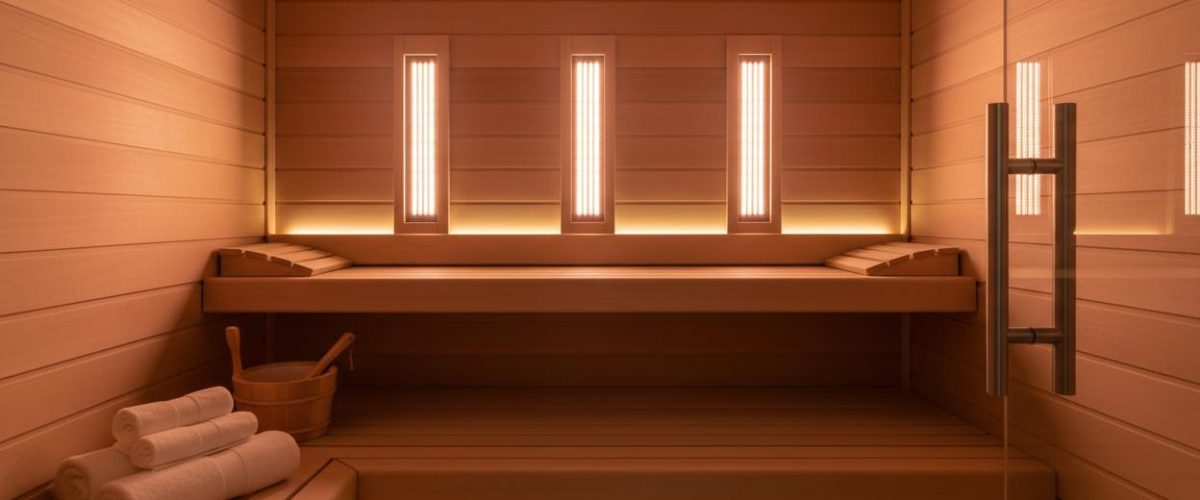
How Infrared Saunas Differ from Traditional Saunas
Traditional saunas heat the air around you (160-200°F), which then heats your body. Infrared saunas use light wavelengths to heat your body directly, allowing for lower ambient temperatures (120-150°F) while producing deeper tissue penetration and more sweating at comfortable temperatures.
There are three infrared wavelengths:
- Near-infrared (NIR): 0.7-1.4 microns. Penetrates skin layers. Supports collagen production and wound healing.
- Mid-infrared (MIR): 1.4-3.0 microns. Penetrates deeper soft tissue. Supports circulation and muscle recovery.
- Far-infrared (FIR): 3.0-100 microns. Deepest penetration. Primary driver of cardiovascular and detoxification benefits.
Full-spectrum saunas combine all three wavelengths for comprehensive benefits.
Science-Backed Benefits
Cardiovascular Health (Strongest Evidence)
The landmark JAMA Internal Medicine study found that regular sauna use (4-7x per week) was associated with a 63% reduction in sudden cardiac death and a 40% reduction in all-cause mortality. The mechanism: sauna heat triggers cardiovascular adaptations similar to moderate exercise — increased heart rate, improved endothelial function, and reduced blood pressure.
Heat Shock Proteins
Sauna exposure triggers the production of heat shock proteins (HSPs) — molecular chaperones that repair damaged proteins and maintain cellular integrity. Elevated HSPs are associated with longevity, improved immune function, and neuroprotection.
Muscle Recovery
Post-exercise sauna use increases growth hormone release, improves blood flow to muscles, and reduces delayed-onset muscle soreness (DOMS). Many elite athletes use saunas as part of their recovery protocol.
Brain Health
Regular sauna use is associated with reduced risk of Alzheimer’s and dementia. The mechanisms likely involve improved cardiovascular health, increased BDNF (brain-derived neurotrophic factor), and heat shock protein-mediated neuroprotection.
Stress Reduction
Sauna use triggers the release of endorphins and reduces cortisol levels. The ritual of deliberate heat exposure followed by cooling creates a parasympathetic response that persists for hours afterward.
The Optimal Sauna Protocol
For Beginners
- Temperature: 130-140°F
- Duration: 10-15 minutes
- Frequency: 2-3x per week
- Hydration: 16-20 oz of water before and after
For Intermediate Users
- Temperature: 140-155°F
- Duration: 20-30 minutes
- Frequency: 3-4x per week
- Cool-down: 2-3 minutes outside, cold shower optional
For Advanced Users
- Temperature: 155-170°F
- Duration: 30-45 minutes
- Frequency: 4-7x per week
- Protocol: Multiple rounds — 20 min sauna, 5 min cool, repeat 2-3x
Post-Workout Sauna
Wait 10-15 minutes after exercise before entering the sauna. This allows heart rate to partially recover. Sauna immediately after intense exercise places excessive cardiovascular load.
Before, During, and After
Before
- Hydrate: 16-20 oz of water
- Avoid alcohol: Alcohol impairs thermoregulation and increases dehydration risk
- Don’t sauna on an empty stomach: Light snack 1-2 hours before
During
- Listen to your body: Dizziness, nausea, or headache = time to exit
- Sit or lie down: Reduces cardiovascular strain
- No phones: Heat damages electronics; also, this is your unplug time
After
- Cool down gradually: 5-10 minutes at room temperature
- Rehydrate: 16-20 oz of water minimum; add electrolytes for longer sessions
- Shower: Rinse off sweat; cold shower amplifies the endorphin response
- Rest: Don’t exercise immediately after a long sauna session
Who Should Avoid Saunas
- Pregnant women: Risk of fetal hyperthermia
- People with unstable cardiovascular disease: Consult cardiologist first
- Those on blood pressure medications: Sauna + BP meds can cause dangerous drops
- Children under 12: Immature thermoregulatory systems
- Anyone under the influence of alcohol or sedatives
The Bottom Line
Infrared sauna is one of the most evidence-backed longevity tools available. The cardiovascular benefits alone justify regular use, and the addition of heat shock protein activation, muscle recovery enhancement, and stress reduction makes it a comprehensive health intervention. Start conservative (low temperature, short duration) and build up gradually. Consistency matters more than intensity.