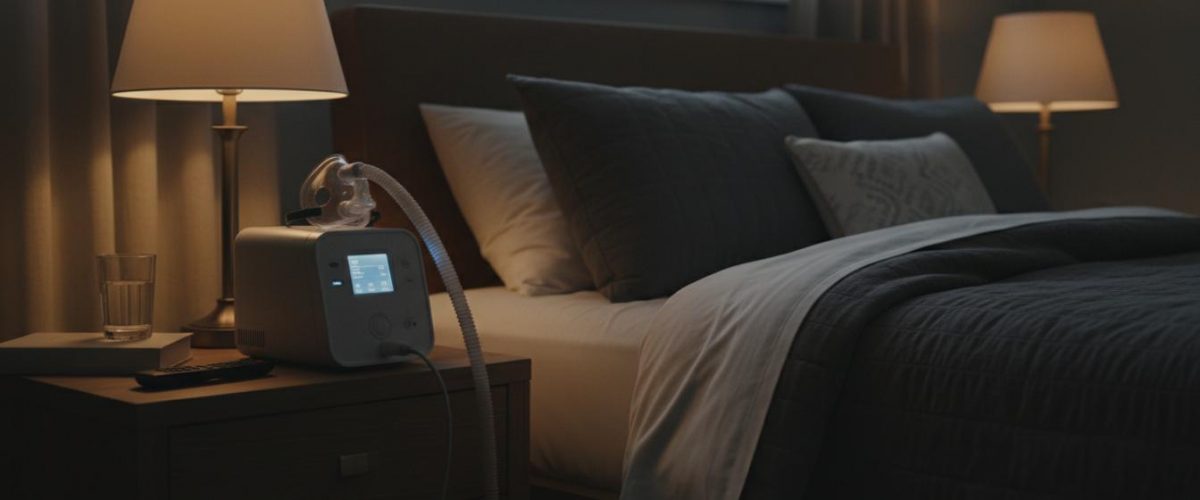
If you wake up exhausted despite spending eight hours in bed, sleep apnea might be the culprit. This condition affects roughly 22 million Americans, and 80% of cases go undiagnosed. I spent months feeling like I was sleeping through a fog before I understood what was happening to my breathing at night.
Recommended: LOOKEE Ring-Pro Wearable Oxygen Monitor on Amazon — tracks overnight SpO2 with vibration alerts. $169.99.
What Is Sleep Apnea?
Sleep apnea is a disorder where your breathing repeatedly stops and starts during sleep. There are three types:
Obstructive Sleep Apnea (OSA) — The most common form. Your throat muscles relax too much, blocking airflow. This is what most people have.
Central Sleep Apnea — Your brain fails to send proper signals to breathing muscles. Less common but more serious.
Complex/Mixed Sleep Apnea — A combination of both obstructive and central. Usually develops after treatment for OSA.
The Warning Signs I Ignored
For years I dismissed these symptoms as “just getting older” or “working too hard.” Looking back, the signs were obvious:
Loud, chronic snoring — Not the occasional snore everyone has. I’m talking about window-rattling, wake-the-neighbors snoring that happens most nights.
Gasping or choking at night — Waking up suddenly feeling like you’re suffocating. This happened to me maybe once a week before I realized it wasn’t normal.
Morning headaches — Dull, persistent headaches that clear up after an hour or two of being awake. Caused by oxygen deprivation during the night.
Daytime sleepiness despite adequate time in bed — Falling asleep during meetings, while reading, or within minutes of sitting on the couch. This was my biggest red flag.
Difficulty concentrating — Brain fog that coffee couldn’t fix. My working memory felt like it was running at 60% capacity.
High blood pressure — Developed in my early 30s despite being fit and eating well. Sleep apnea was the missing piece.
How Sleep Apnea Gets Diagnosed
You have two testing options, and the gap between them is closing fast:
In-Lab Polysomnography
The gold standard. You sleep overnight in a lab hooked up to sensors measuring brain waves, eye movement, heart rate, blood oxygen, breathing patterns, and limb movement. Most comprehensive but expensive ($1,000-$3,000) and requires sleeping away from home.
Accuracy is nearly 100% for detecting apnea events, but the unfamiliar environment can affect your sleep, potentially skewing results.
Home Sleep Apnea Test (HSAT)
You borrow a small device from your doctor, sleep in your own bed, and return it the next day. It typically measures airflow, breathing effort, blood oxygen, and snoring.
Less comprehensive — can’t detect central sleep apnea or measure sleep stages — but catches moderate to severe OSA reliably. Costs $150-$500. Many insurance plans cover it fully.
For most people with typical OSA symptoms, the home test is sufficient. I did a home test first, confirmed moderate OSA, and only did the in-lab test later when evaluating treatment options.
Treatment Options That Actually Work
CPAP (Continuous Positive Airway Pressure)
The most effective treatment. A machine pushes air through a mask to keep your airway open. Works for nearly everyone when used consistently.
Reality check: CPAP adherence is the biggest challenge. About 50% of people stop using it within the first year. Modern machines are quieter and masks are more comfortable than older versions, but there’s still an adjustment period.
I used CPAP for eight months. It worked — my AHI (apnea-hypopnea index) dropped from 28 to 2. But I couldn’t tolerate the mask long-term and transitioned to an oral appliance.
Oral Appliances (Mandibular Advancement Devices)
A dentist-fitted device that moves your lower jaw forward, keeping the airway open. Best for mild to moderate OSA. Less invasive than CPAP, no machine noise, travel-friendly.
Effectiveness: reduces AHI by 50% on average. Not as effective as CPAP for severe cases, but much better adherence rates (80%+ long-term use).
This is what I use now. Took two dental visits for fitting and adjustment. Insurance covered 80% after my sleep study confirmed OSA.
Positional Therapy
For people whose apnea only happens when sleeping on their back. A device (worn on chest or neck) vibrates when you roll onto your back, training you to stay on your side.
Works for about 30-40% of OSA patients — those with purely positional apnea. Cheap ($50-$200) and non-invasive. Worth trying before committing to CPAP if your sleep study shows positional patterns.
Weight Loss
For overweight patients, losing 10-15% of body weight can reduce AHI by 25-50%. Not a cure but often enough to drop from moderate to mild, making other treatments more effective.
This worked for my brother — lost 30 pounds, AHI dropped from 22 to 8. Still uses a mouthguard at night but no longer needs CPAP.
Surgery (Last Resort)
Options include tissue removal (uvulopalatopharyngoplasty), jaw restructuring, or hypoglossal nerve stimulation (an implant that moves your tongue forward when breathing stops).
Surgery has mixed results — success rates of 40-60% depending on the procedure. Only consider after failing conservative treatments.
The Bottom Line
If you snore loudly, wake up gasping, or feel exhausted despite adequate sleep time, get tested. Home sleep tests are accessible and affordable. Treatment works — CPAP, oral appliances, or lifestyle changes can transform your sleep quality and long-term health.
Untreated sleep apnea increases risk of heart attack, stroke, diabetes, and cognitive decline. It’s not just about feeling tired — it’s a serious cardiovascular risk factor that most people ignore for years.
Product Recommendations for Sleep Apnea Management
At-Home Sleep Oxygen Monitoring
🛒 LOOKEE Ring-Pro — Wearable Oxygen Monitor
Tracks overnight SpO2 and heart rate. Vibration alert when oxygen drops. 16-hour battery, Bluetooth sync. $169.99. FSA/HSA eligible.
The Wellue O2Ring is a wearable ring pulse oximeter that continuously tracks blood oxygen levels (SpO2) and heart rate throughout the night. It features vibration reminders when oxygen drops below your set threshold, helping you monitor sleep apnea symptoms at home. The device connects via Bluetooth to a free app that generates detailed sleep reports. FSA and HSA eligible.
Positional Therapy: Wedge Pillows
A high-density foam wedge pillow designed to elevate your upper body during sleep, which helps prevent airway collapse in positional sleep apnea. The gradual slope reduces pressure on the diaphragm and promotes better breathing. Suitable for both back and side sleepers. FSA and HSA eligible.
CPAP Mask Replacement
ResMed AirTouch F20 Full Face Mask
The ResMed AirTouch F20 features a memory foam cushion that conforms to your facial contours for a secure, comfortable seal. The full-face design accommodates both nose and mouth breathers. Replacement cushions should be changed every 30 days for optimal hygiene and performance.
CPAP Humidifier Accessories
Replacement water chamber for ResMed AirSense 10 and AirCurve 10 CPAP machines. Regular replacement of the humidifier tub prevents mineral buildup and bacterial growth. Dishwasher-safe for easy cleaning. FSA and HSA eligible.
Oral Appliances: Anti-Snoring Mouthpieces
SnoreLessNow Somnofit-S Anti-Snoring Mouthpiece
An FDA-cleared mandibular advancement device that gently positions the lower jaw forward to open the airway during sleep. The Somnofit-S is adjustable, allowing you to find the optimal jaw position for your anatomy. Swiss-made design with medical-grade materials. FSA and HSA eligible.
TEST MARKER 12345 – If you see this, content updates are working.
Product Recommendations for Sleep Apnea Management
At-Home Sleep Oxygen Monitoring
Wellue O2Ring Continuous Oxygen Monitor
The LOOKEE Ring-Pro is a wearable ring pulse oximeter that continuously tracks blood oxygen levels (SpO2) and heart rate throughout the night. It features a smart vibration reminder when oxygen drops below your preset threshold — which helps rouse you from sleep during apnea events. The device stores up to 40 hours of data internally and syncs via Bluetooth to a free app that generates detailed sleep reports. 16-hour battery life, rechargeable. FSA and HSA eligible. Note: This is a wellness device, not a diagnostic medical tool.