The Silent Epidemic
Sleep apnea affects an estimated 22 million Americans — and 80% of moderate to severe cases go undiagnosed. It’s not just loud snoring. Untreated sleep apnea increases your risk of heart attack by 140%, stroke by 60%, and motor vehicle accidents by 700%. This isn’t a sleep quality issue — it’s a life expectancy issue.
The problem? Most people don’t know they have it. Apnea events happen during unconsciousness, so unless you sleep with a partner who notices the gasping, you may never suspect a problem.
What Sleep Apnea Actually Is
Obstructive sleep apnea (OSA) occurs when your airway collapses during sleep, blocking airflow. Your brain senses the oxygen drop and triggers a brief awakening — a “micro-arousal” — to reopen the airway. These can happen 5 to 100+ times per hour.
The critical distinction: you’re usually not conscious of these awakenings. You don’t remember waking 30 times per night, but your sleep architecture is shredded. Deep sleep and REM — the restorative stages — are repeatedly interrupted.
Central vs. Obstructive
- Obstructive (OSA): Physical airway collapse. Most common (84% of cases).
- Central (CSA): Brain fails to send breathe signals. Less common, harder to treat.
- Complex/ Mixed: Combination of both.
The Warning Signs You Can’t Ignore
Primary Symptoms
- Loud, chronic snoring — especially if it’s irregular with pauses
- Witnessed breathing pauses — partner observes you stop breathing, then gasp
- Excessive daytime sleepiness — falling asleep in meetings, while driving, watching TV
- Morning headaches — CO2 retention causes vascular headaches
- Dry mouth upon waking — mouth breathing all night
- Difficulty concentrating — fragmented sleep impairs prefrontal cortex function
- Mood disturbances — irritability, depression linked to chronic sleep fragmentation
Risk Factors
- Neck circumference >17″ (men) or >16″ (women) — fat deposits compress airway
- Obesity/BMI >30 — strong correlation, though thin people can have OSA too
- Male sex — men are 2-3x more likely, though women’s risk rises post-menopause
- Age >40 — airway muscle tone decreases with age
- Large tonsils or tongue — anatomical crowding of the airway
- Nasal obstruction — deviated septum, chronic congestion
- Family history — genetic factors in airway anatomy
Getting Tested: Don’t Guess
Option 1: In-Lab Polysomnography (PSG)
The gold standard. You spend a night in a sleep lab hooked up to:
- EEG (brain waves)
- EOG (eye movements)
- EMG (muscle tone)
- Nasal airflow sensor
- Chest/abdominal effort belts
- Pulse oximeter (blood oxygen)
- ECG (heart rhythm)
- Audio/video recording
Insurance usually covers this if you have symptoms. Ask your primary care doctor for a referral to a sleep medicine specialist.
Option 2: Home Sleep Apnea Test (HSAT)
A simplified version you do at home. Typically measures:
- Nasal airflow
- Respiratory effort
- Blood oxygen saturation
- Heart rate
Limitations: HSATs cannot detect central sleep apnea, measure actual sleep time (vs. time in bed), or assess sleep stages. If your HSAT is negative but symptoms persist, you need an in-lab study.
At-home option: Wellue O2Ring Sleep Oxygen Monitor — not diagnostic, but tracks overnight oxygen saturation patterns that suggest apnea. Useful for deciding whether to pursue formal testing.
Understanding Your AHI Score
Apnea-Hypopnea Index (AHI) = number of breathing events per hour:
| AHI | Severity |
|---|---|
| <5 | Normal |
| 5-15 | Mild OSA |
| 15-30 | Moderate OSA |
| >30 | Severe OSA |
Treatment Options That Actually Work
1. CPAP — Gold Standard, Most Effective
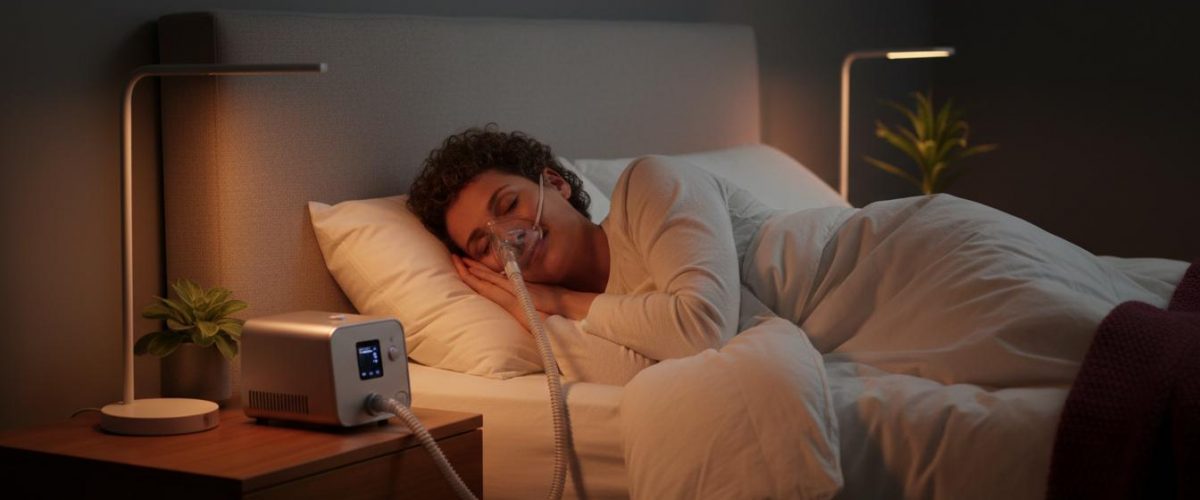
Continuous Positive Airway Pressure. A machine delivers pressurized air through a mask, creating a pneumatic splint that keeps your airway open. CPAP reduces AHI by 85-95% when used consistently.
The problem: compliance. Studies show 40-60% of patients abandon CPAP within the first year due to mask discomfort, dry air, claustrophobia, or noise.
Making CPAP work:
- Mask fit is everything — try 3-5 different mask styles before giving up
- Use heated humidification — prevents dry mouth and nasal irritation
- Ramp feature — starts at low pressure, gradually increases
- Auto-CPAP (APAP) — adjusts pressure throughout the night, more comfortable
- Travel CPAPs like the ResMed AirMini for compliance on the road
2. Oral Appliances — Best for Mild-Moderate OSA
A mandibular advancement device (MAD) pulls your lower jaw forward, opening the airway. Less invasive than CPAP, more comfortable, and easier to travel with.
Effectiveness: Reduces AHI by 50% on average. Best for mild-moderate cases (AHI 5-30) and those who can’t tolerate CPAP.
Get a custom device from a dentist certified in dental sleep medicine — not an over-the-counter boil-and-bite. Custom devices are more effective and protect your jaw joint.
Find a dental sleep specialist →
3. Positional Therapy
Some people only have apnea when sleeping on their back (“positional OSA”). Devices that encourage side-sleeping can help:
- “The NightShift” — vibrates when you roll onto your back
- Backpack/ball devices — make back-sleeping uncomfortable
- Wedge pillows — elevate the upper body, reducing gravitational collapse
Works for ~30-50% of patients with positional OSA. A wedge pillow is the cheapest first step.
4. Weight Loss
A 10% weight reduction decreases AHI by ~26%. A 20% reduction can cure mild OSA entirely. Even modest weight loss improves airway geometry and reduces the fat deposits that compress the throat.
This isn’t a quick fix — but it’s the only treatment that addresses root cause rather than symptoms.
5. Surgery — Last Resort
Surgical options when CPAP fails and other treatments don’t work:
- Inspire (hypoglossal nerve stimulator) — implanted device that stimulates the tongue nerve during sleep. FDA-approved for moderate-severe OSA who can’t tolerate CPAP. ~68% reduction in AHI.
- UPPP (uvulopalatopharyngoplasty) — removes excess tissue from the throat. 40-60% success rate, significant recovery.
- Genioglossus advancement — repositions tongue attachment forward
- Maxillomandibular advancement (MMA) — jaw surgery. Most effective surgical option (85%+ success) but major procedure.
6. Lifestyle Modifications (Adjuncts, Not Cures)
- No alcohol within 3 hours of bed — relaxes airway muscles, worsens apnea
- Quit smoking — reduces airway inflammation and fluid retention
- Nasal decongestants or steroid sprays — if nasal congestion contributes
- Throat exercises — didgeridoo playing and oropharyngeal exercises show modest AHI reduction (30-40%) in some studies
- Side sleeping — gravity opens the airway when not on your back
MyPAP: The New CPAP Alternative
Expiratory Positive Airway Pressure (EPAP) devices are small valves that fit over the nostrils. They create resistance during exhalation that generates positive pressure to keep the airway open. No machine, no electricity, no mask.
Bongo RX and Theravent are the leading options. Best for mild-moderate OSA and travel.
The Dangers of Leaving It Untreated
| Condition | Increased Risk | Mechanism |
|---|---|---|
| Hypertension | 2-3x | Chronic sympathetic activation, endothelial dysfunction |
| Heart attack | 140% | Hypoxia-induced inflammation, arrhythmias |
| Stroke | 60% | Atherosclerosis, embolic risk from atrial fibrillation |
| Type 2 diabetes | 2.5x | Insulin resistance from sleep fragmentation |
| Atrial fibrillation | 4x | Autonomic dysfunction, atrial stretch from negative intrathoracic pressure |
| Motor vehicle accidents | 700% | Excessive daytime sleepiness, microsleeps |
The Bottom Line
If you snore loudly, have witnessed apneas, or experience excessive daytime sleepiness, get tested. Sleep apnea is underdiagnosed and undertreated, but the treatments work. CPAP remains the gold standard for moderate-severe cases. Oral appliances are excellent for mild-moderate. Weight loss addresses root cause. Surgery is reserved for treatment failures.
The cost of untreated sleep apnea is measured in years of life lost. The treatment is measured in hours of adaptation. Do the math.